
“I WANT TO KNOW MORE ABOUT WHAT EL NIÑO COULD MEAN FOR OUR OCEAN.”
Explore the ocean outlook and what the latest monitoring and forecasts show.
Explore the ocean outlook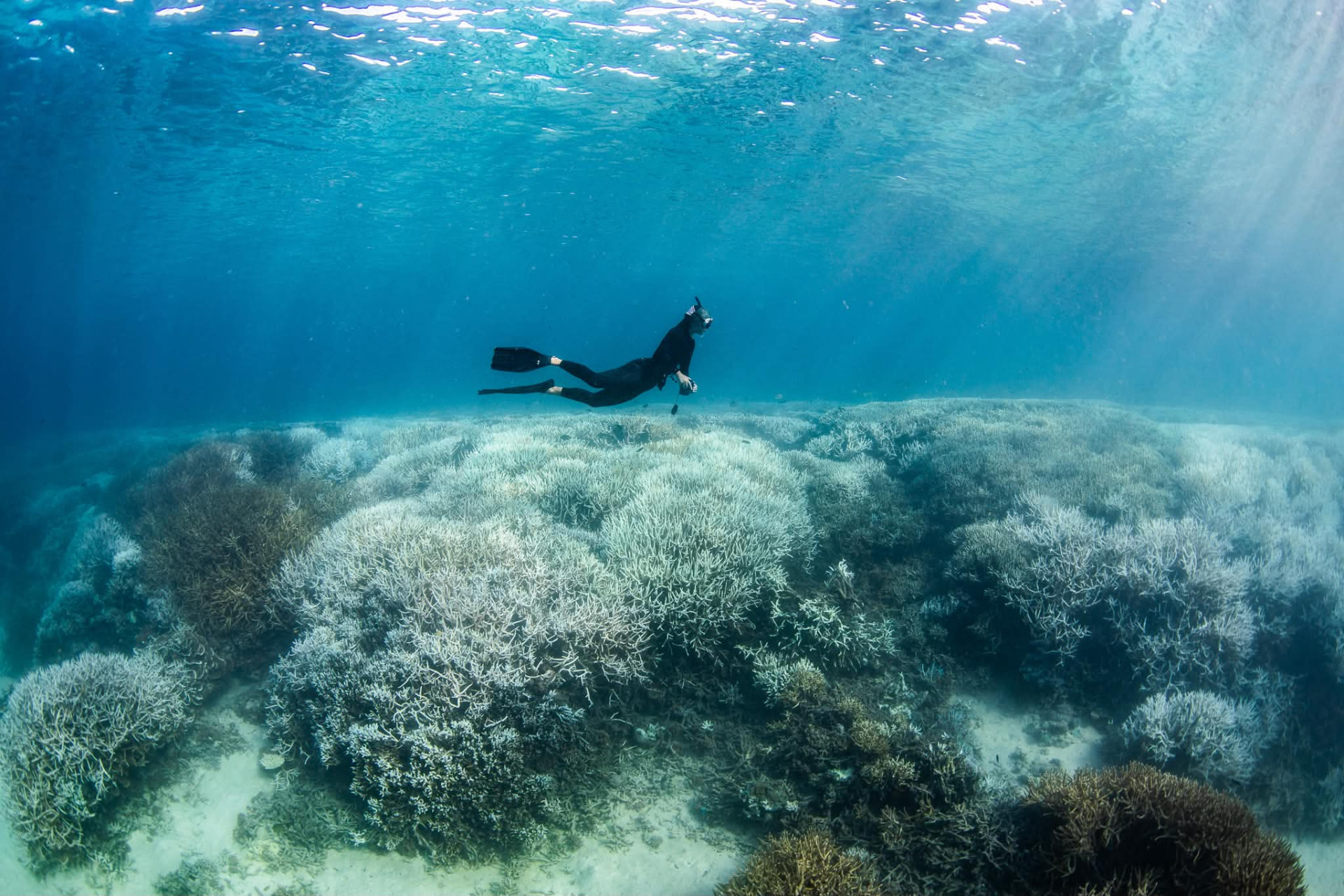
El Niño Rapid Response | Summer 2026–2027
Find your place
“I WANT TO KNOW MORE ABOUT WHAT EL NIÑO COULD MEAN FOR OUR OCEAN.”
Explore the ocean outlook and what the latest monitoring and forecasts show.
Explore the ocean outlook“I AM NOTICING CHANGES UNDERWATER AND WANT TO SHARE MY EXPERIENCES.”
Your observations help build the evidence of what marine communities are experiencing.
Share what you're seeing“I AM WORRIED ABOUT WHAT IS HAPPENING AND WANT TO CONNECT WITH OTHERS FEELING THE SAME”
Find others at your local hub to connect, share stories and act together.
Find your local hub“I think governments should be doing more to respond to these events.”
Help us take ocean communities' experiences to Parliament this summer.
Come with us to ParliamentLooking for something practical you can do? Find climate actions that fit your circumstances, or explore ways to help your community take action. Open the Action Finder
Understand the outlook
If you're worried about what this summer could bring for the reef, you're not alone. Keeping an eye on ocean conditions is one way to understand the risks ahead.
We've brought together three key resources so you can explore the outlook, learn how to read the maps and stay connected to what's happening in your region.
Source: NOAA Coral Reef Watch
NOAA's Four-Month Coral Bleaching Outlook forecasts the likelihood of bleaching heat stress up to four months ahead, based on seasonal model forecasts of sea surface temperature. It's updated weekly and shown at two confidence levels: a 90% chance and a 60% chance.
It's a forecast of heat stress risk, not a reading of what's happening on the reef today, and accuracy falls the further ahead you look. NOAA suggests reading it alongside its current-condition maps.
View NOAA four-month bleaching outlookSource: NOAA Coral Reef Watch
NOAA Coral Reef Watch monitors ocean heat stress and coral bleaching risk. This map shows the highest Bleaching Alert Area level recorded so far this calendar year, helping show where significant bleaching heat stress has occurred.
It's a record of heat stress to date, not a forecast of future bleaching or a direct observation of coral condition. Use the legend on NOAA's page to read the colours.
View NOAA bleaching heat stress mapSource: Australian Bureau of Meteorology
The Bureau's long-range ocean forecasts show expected sea surface temperature anomalies and the likelihood of marine heatwave conditions over the coming months.
NOAA's outlook and the Bureau's forecasts look ahead to the coming months, while NOAA's heat stress map records what has already occurred this year. Forecasts are uncertain and are best read alongside local monitoring and scientific advice.
The colours and categories can be confusing if you're not familiar with marine heat stress forecasts. Our marine heatwave factsheet explains what the maps show, how to interpret the information and what it can — and can't — tell us about conditions underwater.
Read our marine heatwave factsheetAn opportunity to build something that lasts
When events like coral bleaching happen, dive communities are often asked to tell their stories and contribute evidence to disaster headlines, while receiving very little support to actually build resilience.
We want to use this summer to build stronger, better-connected and better-supported marine communities that can respond to environmental change, protect their livelihoods and advocate for the places they love.
We want to make sure the moment strengthens the movement, rather than fades away until the next disaster strikes.
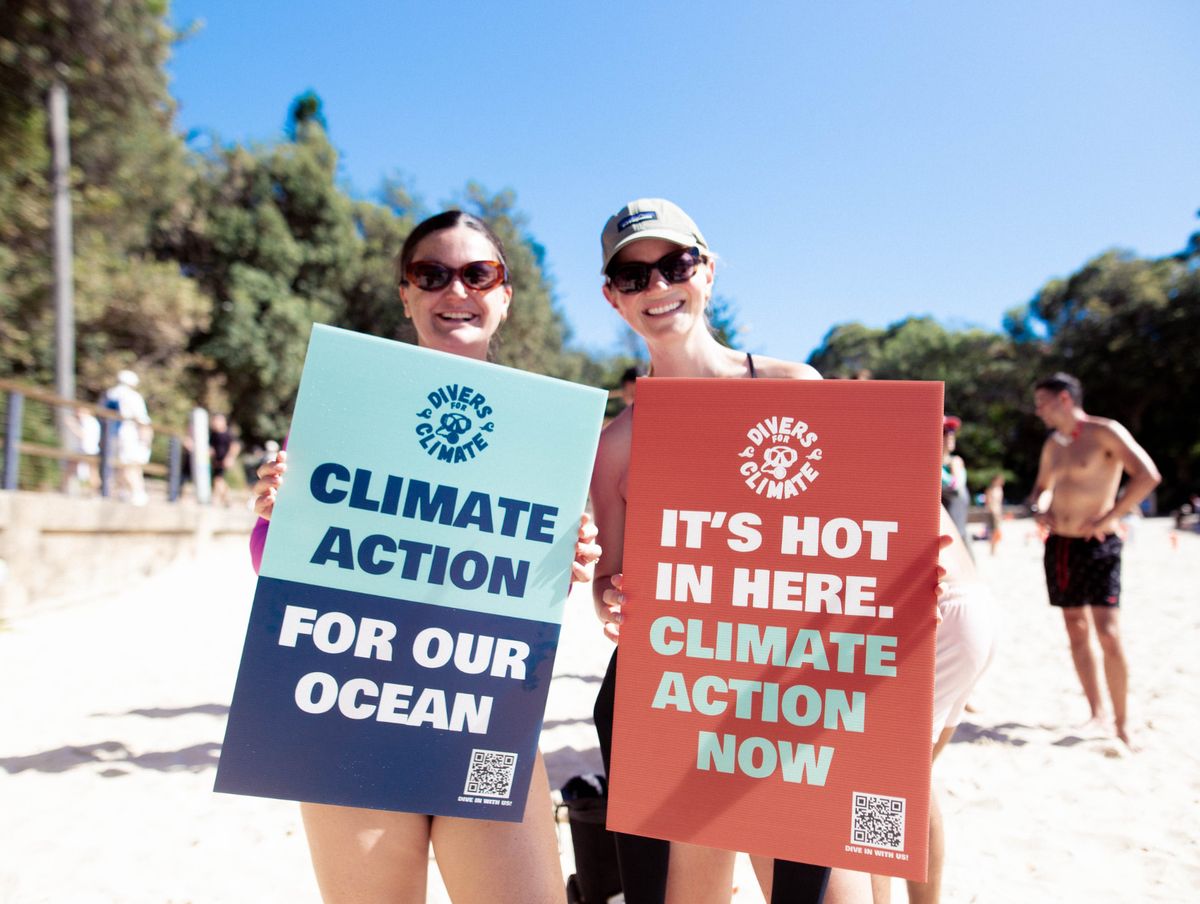
Our summer plan
Each step is a way in — from a coffee catch-up at your local hub to having your experience heard in Canberra. Jump to any step:
Stronger, connected & supported marine communities
We will support our hub leads in Cairns, Adelaide and Exmouth with the resources to keep their communities connected throughout the summer. We've already asked communities what they want — activities will be shaped by each place, and include:
Social events, meet-ups, trivia, film nights and coffee catch-ups that maintain connection and belonging.
Climate communication, storytelling and advocacy workshops.
Connections with scientists, conservation organisations, government and other community groups.
Climate cafés and spaces to process grief, uncertainty and the emotional impacts of environmental change.
Real stories to build a stronger case for change
We are building an evidence base showing how climate-driven environmental change is experienced by divers, marine tourism workers and the businesses and communities that depend on healthy oceans.
This summer we'll continue that work across three regions. The result will be more than stories about a difficult summer — it will be evidence of what marine communities need to withstand the next one.
Our work has already begun to document
Observations shared so far
—
Every observation is read and approved by our team before it appears in this count.
Launching our policy platform
Our hubs will become launch pads for a national policy platform. Over two years we have developed practical policy asks based on what communities tell us they need — and Australia's systems are not yet designed around the realities of a changing ocean. Our policy work follows the full climate-risk cycle:
STAGE 1
Support research and development of diesel alternatives for the marine tourism industry, and ensure all policy and investment decisions account for future climate risk to marine environments and the communities that depend on them.
STAGE 2
Invest in locally-led adaptation, climate literacy and disaster preparedness so divers, dive businesses and marine communities have the capacity to anticipate and manage change.
STAGE 3
Recognise the socioeconomic impacts of marine hazards as disasters, and ensure communities can access appropriate support when environmental change disrupts livelihoods, businesses, recreation and regional economies.
Taking our summer story to the big house
Your experience on the water can shape what decision-makers hear. We will bookend the summer with two Parliamentary delegations, connecting local experience directly with national decision-makers.
November 2026
Representatives from Cairns, Exmouth, and Adelaide will travel to Canberra to discuss:
June 2027
A larger delegation will travel to Canberra during World Oceans Week, including an event in Parliament to present:
Think governments should be doing more to respond to these events? Register your interest in joining a delegation.
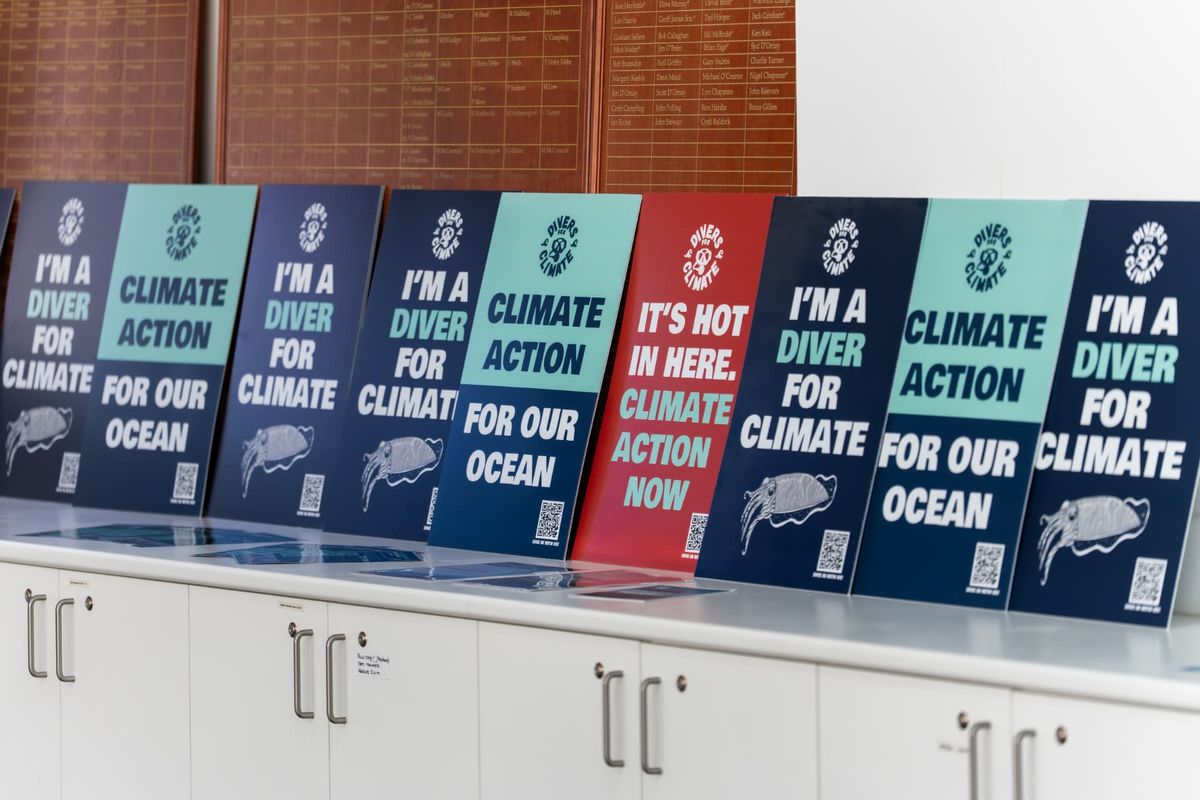

Divers for Climate is a national Australian non-profit organisation that mobilises divers and marine tourism professionals to drive climate action to protect people and oceans, and empowers the dive community to influence climate policy at a local, national and international level. All donations are tax deductible.
Thank you for keeping air in our tank!
With ocean love from the Divers for Climate team.
Form not loading? Open it on Raisely.